The State of Museums: Thoughts from Attending AAM

City skyline at night. Dozens of brightly lit buildings are spread across the panorama, a harbor reflecting the lights skyward in front of them. A beach volleyball field and a memorial sit in the foreground.
Baltimore Inner Harbor Skyline, Joe Ravi, CC BY-SA 3.0, via Wikimedia Commons

Two members of the Museums & Race Steering Committee attended AAM in Baltimore this year. They are some of the more regular AAM conference attendees from the Steering Committee. One has been attending since the 1980s, and the other for a little over a decade. It’s been an important aspect of both of their careers, both in terms of staying up to date with changes in the field while sometimes working outside of it, and making the connections and finding the opportunities to develop our skills and advance our work. We have also discussed within the Museums & Race Steering Committee a truth for this year: the two folks able and willing to attend are white. This has not always been the case, especially when Museums and Race historically hosted a Transformation and Justice Lounge or presented a session, yet it was the reality for 2024.

AAM and the field at large have changed. It may not always be noticeable from year to year, but over a longer period, it’s obviously a different environment. There are many more sessions at AAM directly addressing DEAI issues head on, even compared to 10 years ago. Michael Brown was killed in Ferguson, Missouri in August of 2014. The AAM conference that followed that event, in April of 2015, had a theme around the social value of museums and a handful of sessions on topics like decolonization, empathy, community collaboration, and inclusive language. One session titled “Missouri Burning: Turning Conflict into Conversation” addressed the recent event head on. This most recent AAM, while having fewer sessions overall, had a significantly larger number of sessions focused on similar topics and addressing the topics more directly. In a similar way, just by the eyeball test, presenters and attendees are more racially diverse. Yes, it’s still mostly white and it’s not something where the change is noticeable year to year, but there is a difference. That change is even more drastic when looking back over decades rather than years. 

The state of change in the field has been even larger. Museum workers are increasingly people of color across all departments. This change has not resulted in equitable participation at critical gatherings like AAM and that has impacted the resulting discussion. Is AAM attendance a trailing indicator of the field because more experienced people attend? Regardless of why, it is having an effect.

One session at the conference discussed what the field looked like back in the 70s and 80s. It was heartening in a way. We’re still asking some of the same questions, but there is a huge difference of degree. The priority of those issues has changed. Who is working on the changes is different. There are funders putting in questions about the composition of staff and leadership at museums. There is funding looking to help museums reach new audiences. AAM’s leadership is certainly different, both in terms of the board and hiring its first Black director. Not all of these changes are something that is particularly noticeable year to year. And some of the big changes that are there one year are unfortunately gone the next.

In the 80s and 90s, the events (breakfast or lunch meetings and evening parties/museum visits) were organized by the professional networks that focused on job function – educators, curators, designers, etc. One of our steering committee members discussed how “then-Vice President Pat Williams, began the AIDS Network, and a few years later, she pulled together a group to promote museums’ acceptance of the ADA. I became a participant, not just an attendee. This was also the early days of the pulling those task forces together with the new Latino and Indigenous self-support groups and a more politicized LGBTQ+ Alliance into the Diversity Coalition. As I became more and more involved with the smaller groups by professional role and identity, my commitment and enjoyment of AAM grew.”

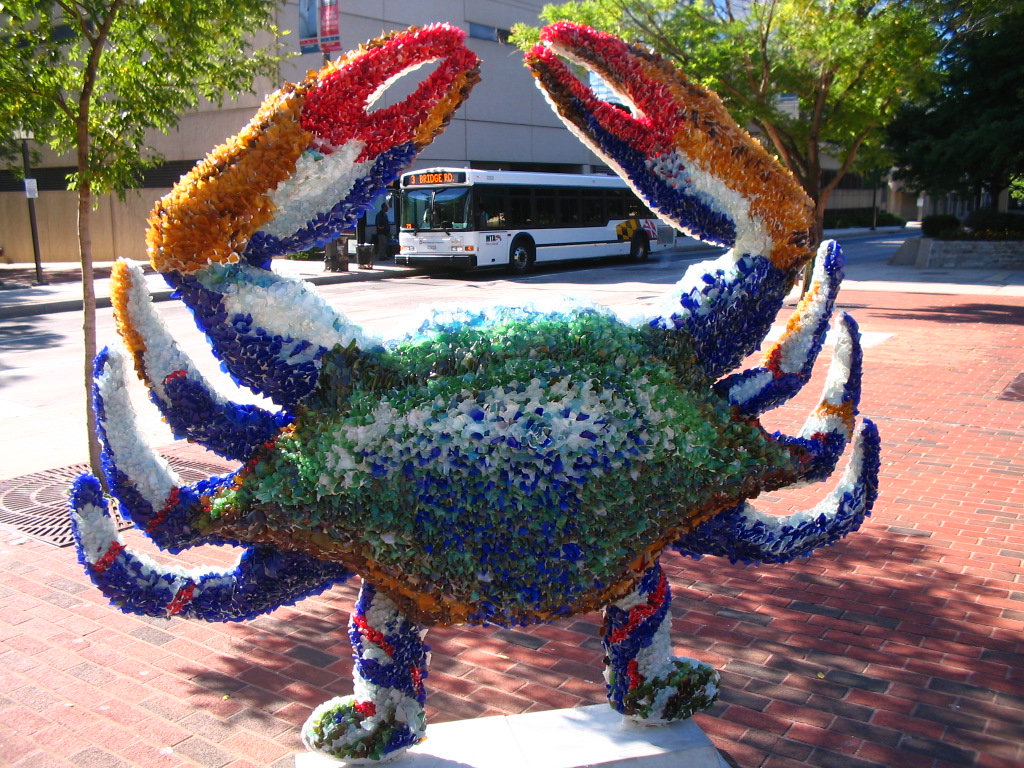
A crab stands upright on human-like feet, claws pointing towards the sky. The crab is covered in multi-colored crystals with blue and green dominating the body and it claws dominated by red and yellow. The crab sits on a brick patio with a bus visible in the background between the crab's claws.
Baltimore Crab, Jyothis at Malayalam Wikipedia, CC BY-SA 3.0, via Wikimedia Commons

More recently, however, AAM fumbled its communication of its commitment to diversity, inclusion, and belonging. Last year, AAM re-organized and dissolved the professional networks and identity groups. Some segued on-line and exist as webinars and listservs so they can still be useful for their members.  But, they could not propose or endorse sessions and lost their identified pages on AAM’s web site. So, AAM this year was different and detached from the issues in the museum field and community. While AAM says it wants to find ways to have people volunteer and help out, it is much harder to not just be an attendee, but be a participant. The field is broader than AAM, moreso now than ever before, so our work must be broader too.

 Our work makes a difference. The good trouble museum workers do every day, the fights we fight, make this field better for those who come after us. It’s slow and never ending, but there are changes. The people that submit sessions, frontline and mid management museum workers, the people that work in leadership positions both seen and unseen–we all impact the field for good or ill. The field is a more diverse and equitable place than it was decades ago. It still has a long way yet to go. That progress will only continue if we put in the effort to make it so.

The State of Museums: Share with Us

What is the state of the museum field, particularly as it pertains to racial justice?

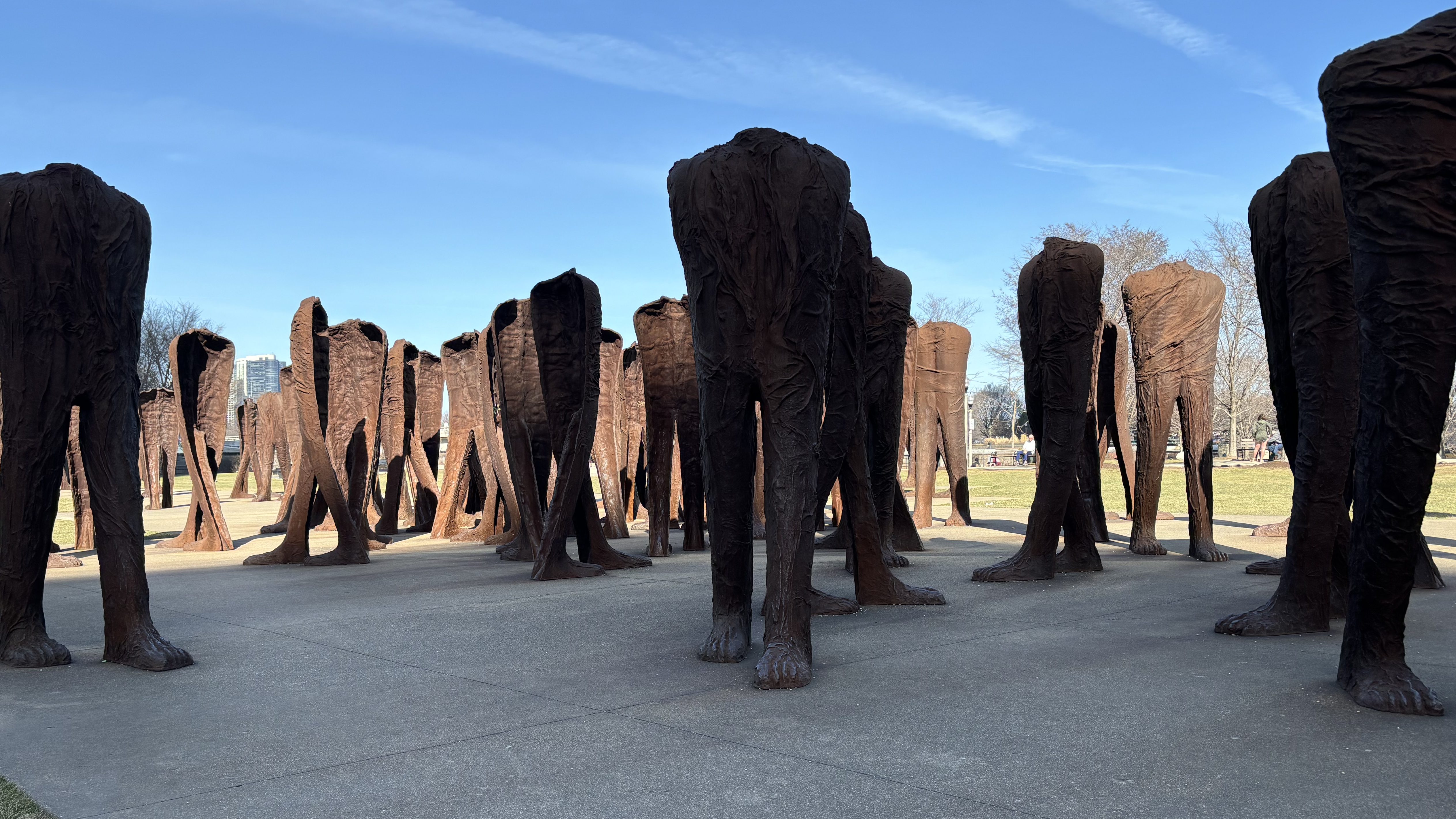
Multiple large headless and armless iron sculptures, appearing to be walking figures in multiple directions, installed in a park with blue sky, grass, and concrete
Agora by Magdalena Abakanowicz, 2003-2006, Grant Park, Chicago, IL – Photo by Brooke Hutchison

That’s a question that is too big for any one person or blog post to cover. There is so much happening all over the country and all over the world. Every person that works in a museum comes from their own unique place and has their own unique view. A few members of the volunteer Steering Committee for Museums & Race were trying to share their experiences at the 2024 AAM annual conference because, well, let’s face it: most of us don’t have the money or the time to attend. The conference also doesn’t capture everything going on in the field, and one or two people’s experiences don’t quite capture everything at the conference. It’s just too large for that.

So we’d like to ask you: What do you think is the state of racial justice in the museum field? What’s getting better or worse? What are you hopeful about or what is keeping you up at night? We’d like to ask you to share your own thoughts, and we’d particularly like to give voice to those folks who don’t always have a platform. Are you from a small museum? Maybe you’re in the department of a larger museum that’s often overlooked. Come from a non-traditional museum background? Maybe you’re inspired by something you saw online or an event you attended or just things happening in your community. Whatever it is, we’d like to hear your voice and share it here. Drop us a line and we can post your message. We’ll start off with some of our personal experiences and hope you can share some thoughts too.

ASTC 2023 Followup

We are delighted to share our third and final blog post from the 2023 Association of Science and Technology Centers (ASTC) annual conference. Members of Museums & Race were joined by panelists to discuss ways they are thinking about and implementing equity and anti-racist work in museums, including the use of the Museums & Race Report Card. The robust and lively session led us to the blog below, as we were not able to answer many questions during the session–nor as detailed or far-reaching as we would like. 

You will see vital questions for our panelists, their accompanying answers for you to learn from, and the individuals who responded. We’ve consolidated a few questions for space considerations. The panelists included Joe Imholte (JI) of the Bakken Museum and Allison Campbell (AC) of University of Michigan’s Museum of Natural History, who were joined by M&R members Jackie Peterson (JP), Karlisa Callwood (KC), and Tim Rhue (TR). We appreciate their willingness to share these insights and reflections, and invite your takeaways from their learnings.

Who does the work?

  • Q: Who does the report card assessment? What if different people at the organization have different opinions about where the organization is at on the assessment levels?
  • Q: Our DEAI work has been somewhat siloed. Education, exhibits, and HR have all done things, but how can we get a coherent institution wide effort?

JI: In response to who completes the report card, for The Bakken Museum the DEAI Committee completes it. The DEAI Committee has 12-14 members (8-9 staff from all levels of the organization and 4-5 Board members) with 3 year term limits so aside from the CEO and the Executive Vice President (who leads the Committee) members change annually, providing continuous new perspectives to the report card.

JI:  In response to how to get a coherent institution-wide effort, that is hard unless your leadership team sees this work as urgent (urgent here meaning the work is critically necessary, not urgency is in expediency). If you don’t have leadership support, you can still drive change, but to do so you will need to build coalitions. Bring the siloed groups together to see what work you can do together – don’t worry as much about trying to convince others. If the work is having a positive effect, and the successes the group achieves (including small ones!) are communicated, more people will want to become engaged/involved, and over time the culture will shift. All culture work takes time (meaning years), and attempting culture change without leadership support is possible, but it takes even longer (more years). For this kind of change, I recommend looking to adrienne maree brown’s principals of emergent strategy for support – especially “there’s always enough time for the right work” and “move at the speed of trust. Focus on critical connections more than critical mass — build the resilience by building the relationships.”

KC: I agree that there’s value in having teams that are not only cross-departmental, but also cross-level. It’s also important for other teams to identify how they can contribute to the efforts so that it’s not just the responsibility of the Education, HR, and exhibits teams. How can the marketing team ensure that there’s appropriate representation in their images? (e.g. Certain groups are overrepresented when promoting access programs.) How can the cafe or store teams help identify and promote Black and/or women owned small businesses as vendors? Etc.

Goals

  • Q: What goals with metrics do you set? Example: do you set up goals that get to diversity metrics of hirings, or metrics of applicants, or is it more about goals around DEI trainings and / or inclusion surveys?

JI: I’m a little wary of goals with metrics for DEAI work, as I think they can trick us into doing box checking work to reach goals rather than the deeper systemic work that takes time and is more difficult to measure progress. For example, The Bakken Museum’s staff is very white. We want to have more BIPOC staff. And, I believe there is a difference between hiring BIPOC staff and being a place BIPOC staff want to work in. We could set a hiring goal and potentially reach it, but if we’re not a place where everyone believes that they can bring their whole selves to work, will we retain the staff we have hired? The harder to measure work is to look at our culture and practices and the systems we have in place. Understanding the history museums have with BIPOC communities, understanding our own biases and where they are impacting who works here and what the experience of working here is like. We’ve taken an approach of using a Theory of Change which identifies activities we’re doing to reach mid-term outcomes. Eventually we’ll return to this Theory of Change and see if what we have learned or done has changed anything related to our outcomes.

KC: Also think about how you can build accountability by creating updates at regular intervals for staff and the community to share back progress, both successes and failures, and receive feedback. 

Fundraising / Budgets

  • Q: What advice would you give to people who are advocating for more money and resources, but receive a constant response of, “we’ve maxed out our resources”? It feels like getting a grant is the only way to support this work…

JI: It is hard – within nonprofits using resources on DEAI work can feel to some like “taking” resources from other areas – or at least that’s how it can appear. When developing a program that has funding, how is DEAI incorporated? For a program for the floor, can existing time/funding be used to build in a step to spend time to consider how bias might be shaping the content or to ensure that multiple identities are represented? I go back to adrienne maree brown’s principles again – small is all. When we think of funding, we often think about the big institutional level of funding, but we all have things we influence or control. How do we build the work into those things? If the organization isn’t prioritizing funding for DEAI, are they ready to do something meaningful with the funding if they had it? I also don’t want to dismiss the power of grants. Yes, having a funding stream specific to DEAI would be amazing, but I’ve done a lot of work with grants that have helped move the ball forward that otherwise would not have happened. “What you pay attention to grows” – how something is funded in some ways is second (to me) to the fact that through a grant we’re now paying attention to something we were not before.

  • Q: How do you build a budget for something like this? What should we account for?

JI: If the question is about completing the report card, leadership can say that work time will be spent completing the report card and discussing the results. If we’re talking about DEAI work more broadly, there are lots of ways if funds are not available through your organization’s budgets. I have applied for grants from federal and state agencies, and local foundations are also a possibility. The funds might be already in the project you are doing, the DEAI work just needs to be identified and prioritized.

Adversity

  • Q: How do you respond when you put forward DEI mesures and you are told it is out of scope?
  • Q: We are just starting this work and are wondering: How do we navigate incorporating this work into an environment like GA or FL where legislation disallows this work?

JI: These are particularly hard, as context is so important, and the organizational cultures may not support the work. Work on the things you can change and can do – small is all, the large is a reflection of the small. Take the time to celebrate wins when you have them. Look for another job if the difference between your values and the organization’s values (or the leadership’s values) are too much and find an organization with a better match with your values. As for the question about the states, that is one that is difficult. I’ve not had to encounter this and so I wonder if any of the suggestions I am about to offer are problematic… One idea is to just do it anyway but don’t call it “DEAI work” or just do it without calling attention to it. For example, for ensuring representation of a range of identities in an exhibit could be a step in the development process be a “content review to ensure relevance with intended audiences” or some such? Going back to the small is all idea, make small changes where you can that will affect systems such as if you are partnering with a university, seek out a tenure-track professor from a marginalized community. By working with your organization that individual gets closer to tenure, and with tenure they can have more security and influence at their university. (Credit to Cynthia Sharpe who shared this idea with me.). I think communicating across organizations and sharing ideas in these states would be huge – learning from what others are doing and sharing what you are doing.

TR: We heard from a few people at the conference about the question of states where the overall culture and legislation sets up existential barriers for equity and justice. This is a topic that Museums & Race would like to explore more. If you, reader, have thoughts or examples of how you’ve approached this issue, please reach out to us. Perhaps we can put together a resource for others with sufficient examples. We are happy to anonymize or provide full credit as you desire.

JP: From a public-facing perspective, I think grounding the work in community engagement or outreach is a way to talk about it and ground your work in DEAI without explicitly calling it that. Growing community partners is always a good thing. While Museums & Race is more explicitly focused on race within our equity work, we always encourage people to think of equity work from the perspective of intersectionality and in the broadest sense. How is your organization welcoming people with disabilities or neurodiverse people? How is your museum engaging with your community’s elder population, or people who speak English as a second language? I also encourage museum staff to simply show up in their communities and listen to what folks are talking about and what they need. Again, museums can be responsive in creative ways that don’t need to be explicitly about DEAI – it’s just being a good, supportive presence. In terms of internal DEAI work, that’s probably a bigger challenge. One thought is approaching it as values-centered work. What are your institution’s core values? Whose voices and perspectives would your institution like represented?

Document Request

  • Joe, would you be willing to share the gender transition documents you mentioned with other institutions?

JI: I would be happy to! It is a part of our handbook, and it draws heavily from resources available from resources provided by the Human Rights Campaign. Rather than including the whole handbook (though I think it would be fine to share that if anyone wanted to see it) I’ve pasted the content into a separate document that should be able to be accessed here: 

Bakken Museum Gender Transition Guidelines

We’d welcome feedback if anyone has any to offer to improve this!

What does AAM’s new CEO mean for us?

AAM has a new leader. Congratulations to Marilyn Jackson and to AAM more broadly, for selecting her as their President and CEO! This is great news for the Alliance and for the field more broadly, given AAM’s impact on us all.

We celebrate the selection of a Black female leader for the largest and most impactful organization in the Museum industry. This historic milestone is long overdue and makes us hopeful for the future, especially given Marilyn’s past experience in justice and equity centered work for the Muhammad Ali Center. We are optimistic that Marilyn will be able to implement the much needed changes within the AAM’s institutional practices which in turn carry a far reaching impact on the Museum industry.

There have been other BIPOC folks in leadership positions at organizations who have not advanced the cause of equity and justice, either through inaction, antagonism, or simple lack of institutional support. Given her past work, we anticipate that Marilyn will not fall in this category and will prove to be an effective leader that advances justice and equity in the museum field.

Cultural organizations in the recent past have selected Black women for leadership positions without empowering them to do the job they were brought on board for. We hope that Marilyn will receive the support from AAM’s board, staff, and the broader museum field to do the job she has been hired to do.

For our part, Museums & Race will continue to be an independent voice in the field advocating for the importance of justice and equity and for a future that is radically different from the one we live in today. We will continue to ask for recognition of the truth of matters before declaring the success of reconciliation. In closing, let us all take this moment to acknowledge the work that has been done so far, and the work that remains before us yet. We go into this year with the positive aspirations that Marilyn’s hiring will serve as the moment when we can once again begin working together to advance the cause of racial justice.

An Invitation to Join

Museums & Race is looking for new folks! Do you care about our cause and have you been looking for a way to contribute?

Museums & Race is inviting applications for volunteers looking to contribute their time to the collective’s work. We welcome people who are committed to this work, have varying experience levels, and a variety of skills. Museums & Race aims to include a mix of people of different racial identities in its volunteer pool. Volunteers can help in the following roles:

  • Local conference assistance
  • Website upkeep
  • Social media
  • Review and assistance with ongoing projects and tools
  • Sponsorship opportunities / grant proposal writing / capacity building
  • Other options – tell us what you’d like to do

If you have a bit more experience with justice and equity work and are interested in joining the steering committee itself, you can use the same form to express your interest in that role.

We’re looking for responses by the end of April. Filling out the form is not a commitment, it’s an invitation to chat and explore possibilities.

Where do institutional DEAI commitments stand now?

Welcome back, and may you have a peaceful 2024. We have had a lot to reflect upon in the short weeks that have already passed in this year. By now many of you might have also come across the plethora of news articles, op eds and reports citing the slow down and sometimes outright backlash against institutional DEAI work. The wave that crested with the social justice movement of 2020 has now begun its not quite unexpected downward fall as more organizations have begun to realize the long-term commitment which is needed to implement quantifiable equitable change within their organizations. This pullback for DEAI work across institutions in the US has been helped along by the polarity of viewpoints about the recent Israel and Palestinian issue. Higher education institutions, museums, and libraries which in the early 2020s were espousing full throated support and commitment for DEAI measures and now abandoning (willingly or forcefully), the very same DEAI policies they once pledged to uphold for good. 

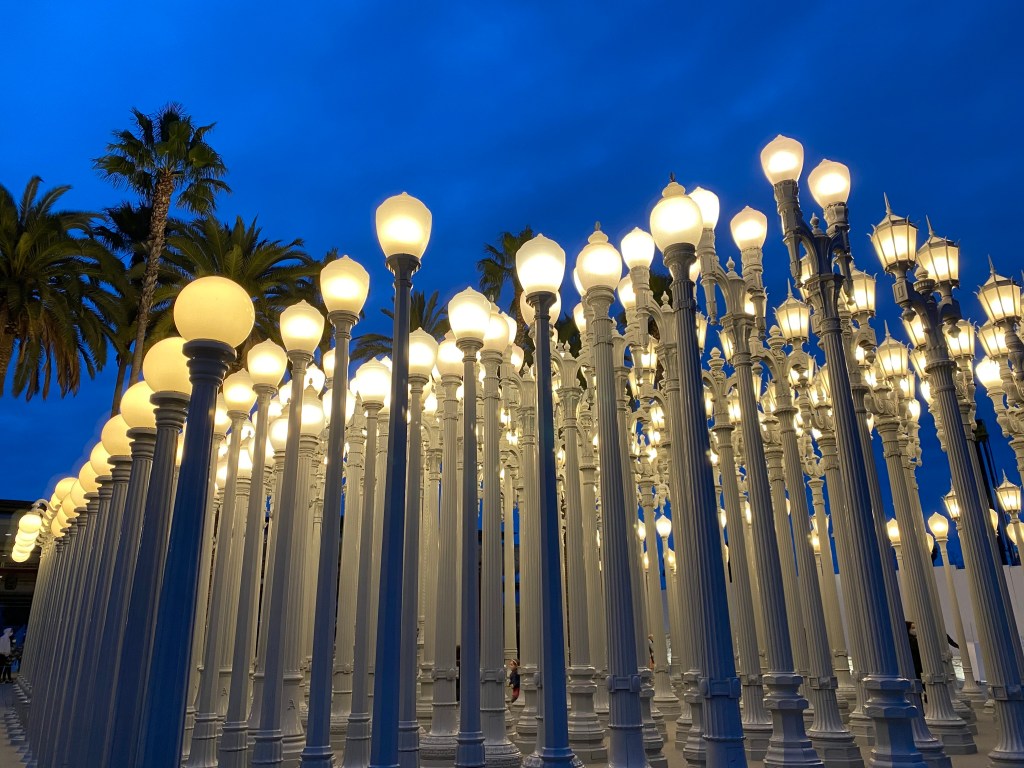
A multitude of various street lamps arranged in rows, lit lamps perched above off-white columns, stand in from of a dusky sky with palm trees in the background.
Urban Light, by Chris Burden, 2008, LACMA – Photo by Brooke Hutchison

The Museums & Race team itself had the chance to discuss this to some extent, late last year with a journalist from Boston Globe who approached the team about their perspectives on institutional DEAI work across North America. Much of the discussion with Jon Marcus, the journalist, appeared to be centered around the idea that libraries and institutions of higher learning could supplement the gaps in historic representation that museums were dealing with. That perhaps inclusivity could come from such places of learning pulling together, each supplementing what the other missed, so that nothing fell through the cracks or was willfully erased. It is a noble idea, but the Museums & Race Steering Committee representatives (Natasha Baruah and Brooke Hutchison) had to point out the unfortunate reality that ease of access, availability of public transportation, unreliable funding for libraries, not to mention the increasing politicization of schools’ curriculum made such an idea nearly impossible. So much of institutional DEAI work has once again gotten tied to privilege – are you located in a state which supports state funds towards equity initiatives, do teachers in your state have the freedom to follow a curriculum based on historical facts, does your institution serve a largely conservative population who balks at the idea of any funds going towards a “woke” curriculum? 

We were asked how Museums & Race saw itself and the tools it shares within this community, in this landscape. And to that we responded as we always have, our resources and tools are meant to empower both individuals and institutions to assess and reflect upon the pressure points, and the steps needed to make the necessary changes. Our landscape has always been fraught, and at times we make great strides towards progress but there are many moments when we move along haltingly. But the community of resilience we create around this practice, is what ensures that at all times our move towards justice and accountability remains unwavering. And this community of practice is important too, because not everything expressed in the written word is sacrosanct. Jon Marcus’s article does the critical work of drawing together perspectives from those intimately involved in this work, but who are often unheard. We appreciate that work, yet the final article did not include all of the voices he consulted with. An abiding practice of the Museums & Race team has been to ensure that all external trainings and communications are represented by one BIPOC and one white person. However, in the case of the Boston Globe article, the version that went into print only mentioned the BIPOC team member. Either by accident or intent, neglect to mention other voices in the room can make the discourse around racism appear to be centered around the practice of BIPOC individuals only. And by now we know the damage assumptions such as these can do in instituting equitable change, because that makes it easy to disregard calls for reform as the clamor of a few and not all. 

We are keen however, to connect with the other institutions and individuals mentioned in the article to understand their perspectives on the work being done on this front. Oftentimes those of us in the US mainland are, not without reason, accused of navel gazing on matters which have larger impact than we are willing to grasp. We wish to remain careful of not perpetuating these ingrained ways of thinking, and instead deepen the discourse and invite collaboration to include experiences which expand our awareness about racism, in different cultural contexts. 

Take Aways from the 2023 ASTC Discussion

A conference room full of attendees sitting at round tables watching the Museums & Race panel presenting with a "Got Questions?" slide projected on a screen. Over 40 attendees are visible with more implied outside the frame of the photograph.

If you are a follower of our blog posts you will know that members of Museums & Race were in Charlotte, NC recently, as panelists for the annual conference for Association of Science and Technology Centers. Our session for the conference was very well attended, and we were heartened by the sense of energy among the attendees! Joe Imholte of the Bakken Museum and Allison Campbell of UMMNH who presented along with us, shared their experiences of using the M&R Report Card within their organizations. After each response from Joe and Allison, the attendees in the room had a chance to discuss the same question at their tables, and the sense of energy in the room was palpable.

Joe and Allison also received a number of follow up questions. The attendees for this session, a majority of whom were from middle management to senior staff of their institutions, were particularly keen to understand how Joe and Allison had implemented the rubrics of the Report Card, given that both of their institutions were at a different stage of the institutional DEAI process. The resulting discussion was deep and engaging, and perhaps not unsurprisingly there was a common thread to many of the questions raised during the discussion. Though the questions were numerous, many sought to understand the details of financial support, board and staff buy-in, or how Joe and Allison laid out the groundwork for this work to even begin at their institutions. Many of the questions raised were also about how accountability could be achieved or built within the organization, to ensure that DEAI practices were integrated as a part of the work culture going forward.

The follow up discussion was spirited and we would have liked more time to get into the contexts for some of the questions raised, but unfortunately the allocated time wasn’t long enough for us to have the depth of engagement which many of the questions deserved. Therefore we collected the attendees’ questions in a google form, and we will be sharing responses in a future blog post on our website here. So be on the lookout for an upcoming post here which has a more detailed breakdown on some of the queries mentioned above. We want to create a community of like minded practitioners through our work, and the resulting discussion from the ASTC conference will be a valuable way for us to find the commonalities in each other’s practice and to grow both as individuals and as organizations. 

Visiting the World of Science at ASTC 2023

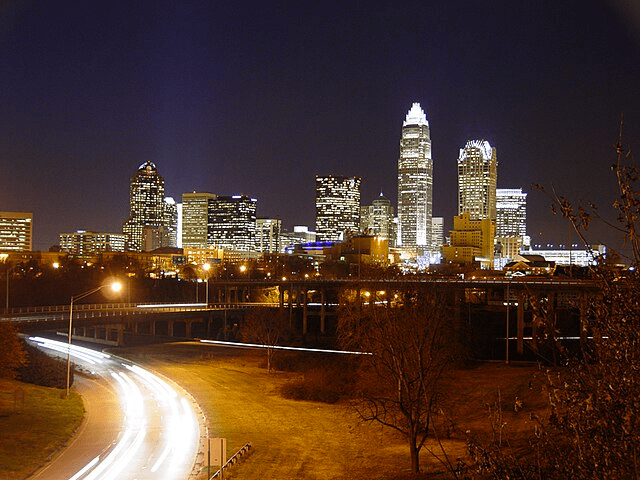
City skyline a night. Nearly a dozen skyscrapers are lit up shining brightly against a dark sky. A park dominates the foreground with highways crossing in between. A road curves from the left of the image to the bottom left corner with the streaks of headlights from an extended exposure tracking the paths of cars.
Charlotte, North Carolina / Mrtoebiter1971 / Public Domain

We are excited to share some news with you! Representatives from the Museums & Race Steering Committee will be in Charlotte, NC, from Friday October 6th till Tuesday the 10th. Our team will be there as panelists in the 2023 annual conference of the Association of Science and Technology Centers. Museums & Race members will present a session on Saturday the 6th, beginning at 1:15 pm, titled “From Assessment to Accountability: Navigating the Twists and Turns of Your Museum’s Racial Equity Journey. Of particular note is that the Museums and Race team will be joined by Joe Imholte, Director of the Bakken Museum and Alison Campbell of the University of Michigan’s Museum of Natural History (UMMNH), for a joint session presentation on the discussion of the Museums & Race Report Card and their work with it. As you might recall from our previous blog post, The Bakken Museum had recently guest written a post at the Museums and Race website where they shared their experience using the Report Card as a part of their institutional equity journey. The University of Michigan’s Museum of Natural History is another institution which has been working with the Museums and Race team to incorporate the framework of the Report Card towards their organizational equity work. And while the Bakken has completed a foundational step in their institution’s equity work, UMMNH is now at the start of this vital journey. Session attendees for this panel will have the opportunity to participate in a discussion with the panelists about their experiences in using the Report Card and to understand the ways in which institutional challenges can be addressed. The organizational differences between the Bakken Museum and UMMNH in using the Report Card will serve as a valuable point of learning for the attendees who might find parallels for their own organizations. Session attendees will also have the opportunity to work in groups to outline goals and initial action steps, based on the framework of the Report Card. Museums & Race intends this session to also serve as a platform for community building on organizational equity work. We are acutely aware of how lonely this journey can be, and fatigue can set in quickly! Having the space to connect with individuals and organizations who are facing the same challenges as you can go a long way in alleviating the sense of loneliness.

Big shout out to ASTC which invited us to host a space for people to connect during this conference! The Museums & Race team was invited to have a deeper engagement during this annual conference, but for this year we have chosen to keep our involvement limited to this session and an hour long follow up in the exhibit hall. If you are in Charlotte for ASTC, but cannot make it to the session, please join us afterwards in the exhibit hall after to keep the discussion going. We hope to have a bigger presence at the ASTC annual conference next year.

Takeaways from Denver

City skyline with a green expanse of park in the foreground, a lake and many leafy trees in the midground, a set of skyscrapers centered backed by a line of mountains with a bright blue sky arching over it all.
View from the balcony of the Denver Museum of Nature & Science / James St. John / Flickr / CC BY 2.0

Like some of you, we were in Denver last month and were able to connect with many old and new friends, building relationships necessary for racial equity work. We had some fantastic engagements with individuals who were at the American Alliance of Museums annual meeting with us, and we have spent time over the last month thinking about all that was learned. While there is much that remains to be done it is worth acknowledging that there really is progress being made at a local level across the country, and that should be celebrated.

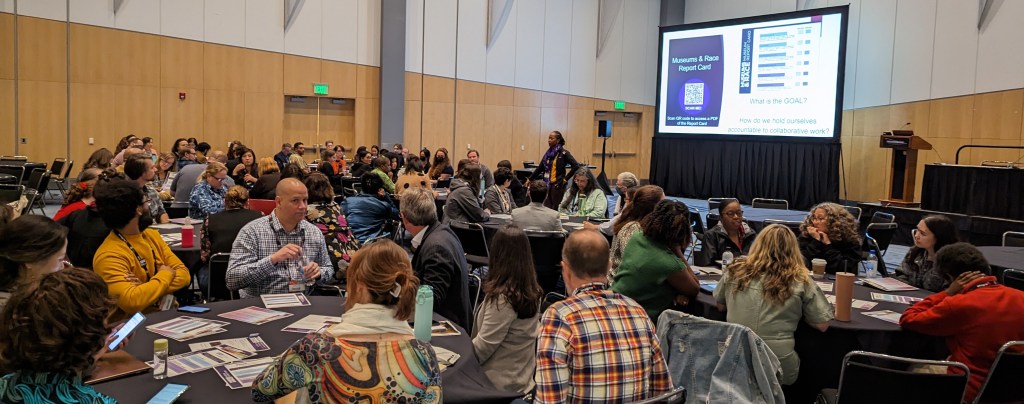
The session we led was particularly productive, and gave us the opportunity to interact with individuals and institutions engaged in the work of racial equity. About 70 of the participants shared the work they were doing in this regard at their institutions which left us all feeling energized and empowered.

Ten roundtables packed with a diverse set of conference attendees in conversation with each other.

We began the session by asking everyone to share their perspectives on the progress made/not made within the Museum field so far, in terms of racial equity. As the conversation deepened, we broke the participants into smaller groups where they engaged in the TRIZ activity. This activity had them identify some of the worst case scenarios for the museum field, whether anything at their institution resembled or contributed towards these possible scenarios, and what the first steps to addressing those issues could be.

  • Making decisions based on fear
  • Being [un]able to have the hard talks
  • Making content decisions […] solely on the funding/donors

Group 1

There were some really great ideas and good discussion around negative scenarios ranging from maintaining the status quo to changing laws that disallow conversation about race. This feels dishearteningly possible with the increasing politicization of school curriculum in certain states across the United States. Engaging in the session and its activities however, gave everyone a sense of the community that is growing around this work and left the attendees feeling hopeful and believing of the changes that could be made in the organizations.  They walked away with concrete ideas from their fellow attendees and tools like the Museums & Race Report Card.

For those just starting on this journey, the work can feel daunting. It’s good to reflect on the successes others have had, and how they can act as guideposts on this journey. These stories of progress can be mirrored at other institutions for positive impact. We are in contact with a couple of organizations that you’ll be hearing from later this year around the great work they are doing. Our next blog post will be about one such organization which has concretely implemented equity practices at an institutional level.  Keep an eye out for it!

And lastly if you have a story to share about equity work in your organization, please let us know online or through email and we can work with you to make a post as well.

A set of conference roundtables packed with attendees. There are some papers visible on some of the tables and a slide is displayed in the background titled, "Museum & Race Report Card".

The Year That Was (2022 Review)

Happy May, y’all! It’s been a minute since we’ve posted, but we’ve been busy behind the scenes. We wanted to drop a note about what we’ve been up to and what we’ve got coming up this year, and we’re hoping to connect with some of you this next year in person and online.

Museums & Race
We're here to _.
Disrupt
Elevate
Decenter
Reclaim
Kick it
(yes you can)
We're here too.

Over this past year, multiple organizations have reached out to us to support them in their anti-racist journey and to help make concrete structural changes. We’re happy to share that we’ve used the Museums & Race Report Card to forge a community of practice. In partnership with Brooke Hutchison, we facilitated a course at Bank Street Graduate School of Education for current and future museum professionals. The course focused on organizational change and implementing racial equity practices. 

In partnership with Brooke Hutchison and Enrich Chicago, joined in examining the overlaps of caste, race, and white supremacy, and providing a systemic context for exploring the dynamics of each. Attendees explored these oppressive systems and their cultural contexts through the lens of racism in arts and culture. 

We’ve also met with multiple museums to address how they can integrate the Museums & Race Report Card into their strategic work. Later this year in this space, you’ll be hearing the stories of a couple of these organizations and their process towards implementing a more radical future. We’ll also be at the ASTC conference with representatives from those museums to share their perspectives and lessons learned from engaging in this work with us. As the year continues, we look forward to finding other places to connect with people throughout the museum field about our work whether that’s at conferences, online, or through new relationships.

Five people wearing masks and multicolored Museums & Race shirts looking at the camera in a conference center with a cityscape behind them.

And yes, we will be at AAM later this month. We’ve carefully considered our participation and despite some of our misgivings from past interactions, AAM remains the largest gathering of museum professionals in the country This is another example of the power imbalance between organizations and individual professionals, but the conference is one of the few ways we can find this level of community together. Our presence at the conference allows us to find like-minded professionals who are committed to forging equity and organizational anti-racist practices. 

We also remain cognizant of the fact that there are many people within AAM who are themselves working to implement a more equitable system. Much of AAM’s communications recognize this work. We hope that AAM will hold itself to a greater practice of accountability as they transition between leaders. We will continue to encourage AAM and the museum community at large to make meaningful change.

Finally, as our work continues to grow we’re looking to add new people to be directly involved in our work, later this year. Museums & Race is a non-hierarchical space, and we are mindful of the differences in each members’ time commitments. Depending on their time availability, incoming new members have the option of joining the steering committee, helping with our website, putting together conference events, or coaching sites on ways to use the Report Card. If you’re interested, keep an eye out for announcements in the space and let us know on our contact us/support us page.