Report Card Spotlight: Transparency

This post is part of a series examining the concepts of the Museums & Race Report Card. This series is intended to help readers more effectively use the Report Card by increasing their understanding of each key concept in light of justice and equity work. Each post has been written by a member of the Museums & Race Steering Committee with feedback from the group.
Banner with the title "Transparency". A magnifying glass surrounds the letters "C" and "Y".

Many who work in or adjacent to the museum field devote their professional lives to dissecting the history of white supremacy, understanding its continued presence and impact on people today, and taking concrete steps towards overturning it and building a truly just and equitable world. Regrettably, the existence of initiatives like Museums & Race, #MuseumsAreNotNeutral, The Incluseum, plus countless thought pieces on the subject, proves that museums and museum practitioners are not yet fully united in building it.

The Museums & Race Report Card identifies institutional transparency as one of the ways museum professionals can evaluate whether their institutions are, or are not, contributing towards building that world. 

In this context, transparency means whether your institution’s leadership sees value in and has a codified process for its decision making, and communicating those decisions both internally to staff and externally to community partners. This is true at any level of leadership but has the distinction of being most impacted by the decisions of executive leadership. 

Screenshot of the Transparency section of the Report Card rubric consisting of a row of five columns. First column: Transparency. Second column: Your organization sees no value in having transparency in decision-making and the related processes with staff and community partners. Third column: Your organization understands the value of transparency in decision making, has identified areas for growth, and has prioritized ways to be more transparent but is not consistent with the approach. Fourth column: Your organization understands the value of transparency and is implementing plans for increasing transparency with staff and community partners. The organization has created channels for feedback and is responsive to that feedback. Fifth column: Your organization has codified decision-making processes and channels for feedback from staff and community partners where appropriate. Staff and community members feel well informed about the organization's decisions that directly and indirectly impact them and the pathways leading to those decisions.

An example from recent history demonstrates how impactful moving along the Report Card’s rubric towards an “A” grade can be to your institution. 

In an exhibition at the Smithsonian Institution’s National Museum of American History that opened in 2008, a section on presidential impeachments became outdated when President Trump was twice impeached in 2019 and 2021. To address this, in September 2021, the Smithsonian added a label “intended to be a short-term measure to address current events” according to a spokesperson quoted in a PBS News report

The Smithsonian is widely regarded as a trustworthy institution, and this may be the reason why the temporary label did not engender any significant attention at that time. 

People may have continued to presume the best of the Smithsonian had it not been for the 2024 election and former President Trump’s return to power. 

Emboldened by the return, he issued an executive order in March 2025, so-called “Restoring Truth and Sanity to American History,” that falsely characterized both the National Park Service and the Smithsonian as coming “under the influence of a divisive, race-centered ideology.” 

Sometime near the end of July 2025, the Smithsonian quietly removed the temporary label acknowledging Trump’s two impeachments. 

Word spread, and a backlash ensued. Media attention, alongside comments from museum professionals on discussion boards and listservs, questioned whether the Smithsonian was kowtowing to pressure and intentionally rewriting history. 

In response, in early August, the Smithsonian issued a statement stating that they were “not asked by any Administration or other government official to remove content from the exhibit,” and that the removal was initiated because the temporary label “did not meet the museum’s standards in appearance, location, timeline, and overall presentation.” 

Was the label’s removal an outcome of a regular content review with innocently poor timing, or were they faltering under increasingly hostile political pressure? 

Whether people believe the Smithsonian’s statement or not hinges greatly on their previous levels of transparency and the trust they have built, pitted against the increasingly recognized lack of transparency and trustworthiness of the current Presidential administration. 

Knowing the scrutiny directed at them, both from those seeking to censor history and from those looking for the Smithsonian to resist, what potential danger could arise from crystal clear transparency? It is absolutely reasonable to acknowledge some limits. 

Protecting individual staff members against public exposure is a completely fair line to draw, for example. Perhaps disclosing plans for a controversial exhibition topic might lead to imbalanced and unwelcomed public pressure from highly partisan individuals or groups. Again, the Smithsonian serves as an example in their aborted 1995 exhibition on the full impact of the two atomic bomb attacks in Japan.

Despite the potential pitfalls, codifying a decision making process that allows museum leaders to strive towards as much transparency as each situation allows provides significant benefit to your institution’s strength and longevity. Transparency breeds trust, and trust—both internally with staff and in the institution engaging and supporting its community—is crucial. 

As you evaluate your own institution and advocate for increased transparency, here are some points to consider along that journey: 

Codifying and communicating a process for key decisions:

  • If you work in a hierarchical institution (as most of us do), who is responsible for making key decisions? Those individuals, and the people they seek input from, should be representative of the community impacted by the decision. Additionally, there should be a clearly defined and clearly communicated process for how decisions are made. Best yet, consider advocating for flattening or eliminating hierarchies. If that is not possible, at the very least, expand those invited to the table and ensure their input is listened to and acted upon. 
  • How are key decisions communicated to those impacted? Leaders should engage in open conversations where a sincere effort is made to create transparent understanding about the implications of a decision. Top-down communication where an email or a memo is sent dictating a decision may count as codified, maybe even transparent, but it does not allow for adequate response from those impacted. Staff and community partners deserve to be treated like rational adults capable of conversing about a decision, even if they do not agree. 

Codifying and communicating feedback from staff and community partners:

  • Can staff members from marginalized identities communicate issues and experiences at their institutions safely and anonymously? The staff positions to communicate these issues with, and the process for review and resolution, should be clearly known. Your staff should feel able to be transparent in communicating their issues without fear of reprisal, being edged out of future leadership opportunities, or otherwise re-marginalized. 
  • Does your institution have one or several community advisory committees? If so, its members deserve to be compensated for their time and for their input. Those individuals should feel that their input is heard by those with decision making authority, and that decision makers will implement as much community input as they are capable of. Community advisors and museum staff should have a warm and mutually respectful relationship where advisors feel the museum is theirs. Ideally, ideas should flow upward from the community and not be dictated downward by staff or board members.

Codifying and communicating feedback from guests:

  • Does your institution have a pathway for guests to share the impact the museum has had on them, whether positive or constructive? This feedback should be communicated regularly to staff so they can see, review, and act upon it when generating future educational programming, exhibitions, at the front desk, or any other sphere of staff action. 

Codifying, communicating, and acting upon institutional values:

  • Transparency is not just about the institution’s values, but the actions it takes based on those values. Has your institution worked to create a value statement? Is that statement posted publicly, either on the institution’s website or, better yet, prominently within the institution for guests to see? Staff and community partners should be able to clearly see that the institution’s actions are matching its values. When there is a disconnect between actions and values, staff, community partners, and/or guests should have a clear path to communicate and hold the institution accountable. 

It is certainly fair to acknowledge that every staff member, community partner, or guest will not agree with each decision an institution makes. Even if your institution has a fairly homogenous staff and user base, there will be diversity of opinion within it. 

That being said, having a transparent method for everyone to understand a decision and its implications, knowing who is responsible for making the decisions, and the process decision makers go through to seek input and arrive at a conclusion, all goes a long way towards building trust and reducing public controversy. 

To quote famed poet Pablo Neruda, “Hate is like a swordfish, working through water invisibly…but transparency disarms it.” 

Report Card Spotlight: Accountability

This post is part of a series examining the concepts of the Museums & Race Report Card. This series is intended to help readers more effectively use the Report Card by increasing their understanding of each key concept in light of justice and equity work. Each post has been written by a member of the Museums & Race Steering Committee with feedback from the group.

Banner with the title "Accountability." A dotted path winds between three sign posts. The first is titled "Taking Responsibility", the second and third are checked boxes.

This is a particularly fraught time in understanding the intersection of DEAI, anti-racism, and accountability since society as a whole and many of the external institutions, such as funding bodies and community partners, with which museums collaborate are redefining their commitments to DEAI and anti-racism. Accountability can facilitate understanding of an institution’s progress towards best practices in aspects of governance. Museum & Race (M&R), which continues to be committed to upholding the principles and practices of Diversity, Equity, Accessibility, and Inclusion (DEAI) and anti-racism, has developed the M&R Report Card as a tool for museum staff for personal and team agency. This blog by members of the Museums & Race Steering Committee maintains M&R’s commitment to DEAI and anti-racism as reflected in the grading system in the Report Card, which measures an organizational lack of a plan to track success and impact of DEAI activities (F), through degrees of planning for assessment, up to a fleshed out action plan with metrics and ongoing systemic implementation efforts (A). 

Screenshot of the Accountability section of the Report Card rubric consisting of a row of five columns. First column: Accountability. Second column: There is no organizational-wide effort underway to account for DAEI activities, or to measure success and impact. Third column: An action plan for assessment has been created, but no measurable objectives or metrics have been included. Fourth column: An action plan with metrics has been created, but implementation is sporadic, and assessments are not used to recalibrate and update DEAI efforts. Fifth column: An action plan with metrics has been created, and an ongoing systematic effort is in place to implement the assessment and to evaluate and recalibrate DEAI efforts.

Accountability refers to the intitution’s ongoing commitment to evaluation, transparent reporting and feedback of its practices and programs related to diversity (of race, gender, sexuality, age, ability, religious beliefs, language, etc.)

Accountability for any not-for-profit institution requires goals, responsibility for meeting those goals, evaluation of the institutions’ activities towards those goals, and a system of internal and external feedback. With the understanding that museums function through an interconnected web of contractual obligations and dedicated individuals working in community to make those happen, your institution has agreed to fulfill specific requirements on a pre-set schedule. What makes museums’ accountability different is the range of those obligations and the amount of museum staff and time needed to properly assess and report them. 

To whom is a museum accountable?

Internal – A museum’s commitment to DEAI and anti-racism can be top down, coming from the board and leadership, or can be instigated by or through the staff (moving up, down, sideways, etc.). In either case, progress towards that goal (as defined through the Report Card) should be assessed and communicated frequently and consistently to leadership and staff, especially progress toward DEAI and anti-racism in hiring and staff interactions, as well as improvements in public engagement. Any additional governing institutions, such as sponsoring universities or municipalities, should be included in this  internal reporting.  

When an institution is firmly committed to DEAI and anti-racism, it can communicate those valued practices through all its contractual accountability, as listed below.

External – The institution is contractually required to provide accountability to any funders of core functions, as well as funders for specific projects. This can include facility and staff budgets, as well as exhibitions, programming and acquisitions. In other words, money coming in must be balanced by responding with information. 

External – Those assessments should be reported to the institution’s community, which can include but not be limited to geographic neighborhood and/or to subscribers or membership groups. 

External – The institution may also be accountable to collaborating institutions, including but not limited to artifact lenders and/or hosts for touring exhibitions. 

Accountability: What are you assessing and reporting? 

Accountability is always reporting on activities which have begun and, in some cases, may have been completed. The standard accountability practices for nonprofits focus on finances – income, expenditures, adherence to project budgets, etc. The accumulation, evaluation, and reporting of this information may need to meet a multitude of internal and external deadlines, including but not limited to board meetings, federal or state tax schedules, and preparation of interim or final reports to funders. 

Though accountability serves as a critical component of an organization’s standard operating procedure, it is important to apply it from the lens of anti-racism since standard operating procedures have been long held up as an excuse for racism and exclusionary practices. Planning for accountability will facilitate your museum’s move in the Report Card from “little planning for assessment” (grades D-C) to the “planning for metrics and assessment” (grades C-B to A). 

It is important that all contractual obligations be understood and communicated to every part of the institutions’ staff who need to be involved. This can and will range from the head of Finance responsible for the budget to the Security staff that counts visitation since all of these factors shape the institution’s activities in, and commitment to, equity and anti-racism.

The institution may also need to report non-financial information with its accountability reports, chief among this being visitation, participation, or other related audience statistics. For instance, accountability should include an awareness that, often, visitation in museums is not demographically inclusive—a direct result of systemic exclusionary practices in the field.  

Accountability with adherence to the Museums & Race Report Card necessitates that an anti-racist outlook should be reflected in any and all reporting of an institutions’ functions. This requires an institutional commitment that you may need to fight for. In some cases, those values may be shared by a funder/funding organization. In New York, for example, museums may compete for grants of public funds through the New York State Council on the Arts or the New York City Department of Cultural Affairs. In both cases, long held policy requires that the institution provide accountability of their commitment to diversity in governance, representation and public engagement. In other states or under the 2025- federal administration, those policies might make that museum ineligible for funding. This is the crisis that currently concerns the museum field as well as related not-for-profit arts organizations. 

To repeat: Accountability is always reporting on activities which have begun and, in some cases, may have been completed. It is important that accountability be accurate, provide introspection on “standard practices,” and be consistent despite potential conflicts, i.e. do not revise facts to accommodate changes in reporting values.  

However, even when there is conflict with a funding organization’s values, institutions (individuals and teams) have a responsibility to uphold their own ideals, and work together to keep each other accountable (beyond funding). This is the accountability that we have to our colleagues and to the communities that museums serve, especially in challenging political times. 

Report Card Spotlight: Responsiveness

Cultural Responsiveness in a Post-DEI Era

This post is part of a series examining the concepts of the Museums & Race Report Card. This series is intended to help readers more effectively use the Report Card by increasing their understanding of each key concept in light of justice and equity work. Each post has been written by a member of the Museums & Race Steering Committee with feedback from the group.

Banner with the title, "Representation" with a row of three icons showing speech bubbles, a listening ear, and an set of three arrows splitting from a single stem below the white text on a green field.

We are at an unusual crux in the 21st century, ostensibly doomed to repeat our terrible histories, as autocratic political shifts sweep across the globe. These movements towards totalitarianism are based on ideals of a burnished past that glorify homogeneity and vilify differences. As more governments embrace authoritarianism, places of learning are intentionally targeted—defunded, battered, and, sometimes, literally bombed in order to push singular narratives that narrow people’s understanding and limit their education. All the attempts at equity-building work in recent years are now under attack, especially in the United States, where the Trump government is explicitly “terminat[ing] every diversity, equity, and inclusion program across the entire federal government,” and using federal funding as a cudgel to bully other institutions into following its wake.

Museums and libraries have been the mass casualties of the Trump government’s obliteration of cultural funding, archives, and, really, anything that even dares hint at inclusivity. We know that race is one of the lowest hanging fruits in these situations, ripe for the picking. We know that controlling the narrative is critical to controlling the people. Restricting learning and access to education restricts the freedom people have to expand their horizons.

Now, more than ever, we need tools that help us navigate social growth so that our museums don’t stagnate, or actively devolve. The M&R report card can be seen as a tool of resistance that helps us take action, gentle or drastic, in the wake of oppressive regimes.

Diversity, Equity, Accessibility, and Inclusion

In recent years, there has been increasing pressure on museums (externally and from within) to decolonize their operations and implement more equitable practices. Museums have responded—sometimes enthusiastically, sometimes reluctantly—in efforts to remain relevant to their time. Systemic prejudice has been brought into sharp focus as racist infrastructures within museums are questioned, and social justice movements have compelled institutions to respond to a range of Diversity, Equity, Accessibility, and Inclusion–focused initiatives. For many, the work had only just begun. More time is required to undo centuries of encrusted racism that has grown like barnacles and built its own discriminatory biome.

The societal bend towards justice and equity has always been propelled by massive social actions. The Black Lives Matter movement, in response to the murder of Trayvon Martin, among many others, sparked a sustained campaign to address structural racism and racial inequity in the US. In 2014, Michael Brown’s murder produced the #MuseumsAreNotNeutral and #MuseumsRespondtoFerguson campaigns. The push toward dismantling systemic racist structures included inspiring the creation of Museums & Race. With every subsequent horrific incident that made global news, we saw incremental changes towards social justice, but such initiatives were mostly ad hoc. In 2020, the murder of George Floyd forced a global racial reckoning and propelled mass action around the world.  Since then, “DEAI” as a concept has gained significant traction within institutions worldwide.

An area view of an 8 block area of DC. "Black Lives Matter" is written in yellow on the central street on the left half. Lafayette Square is in the center and the White House is on the right.
The Black Lives Matter mural on the road to the White House, as seen by the Planet Labs satellite orbiting overhead, Planet Labs, CC BY 2.0, via Wikimedia Commons.

In response to the  Black Lives Matter movement, many museums started their own  equity-building initiatives—with caveats. From funding to staffing, museums—big and small—have expressed limitations to their varying levels of engagement. The Museums & Race Report Card serves as a guide to help museums and museum workers determine their stages of responsiveness and consider what more can be done.

What Does it Mean to be a Responsive Museum?

Museums are inconsequential without their visitors. Constantly vying to attract wide swathes of visitors from varying demographics, museums stay relevant as long as they matter to their audiences. It is imperative for museums to be responsive to their visitors’ interests to drive audience engagement: from pursuits of leisurely subjects related to hobbies and recreations to subject matter that addresses their concerns and challenges. 

A responsive museum understands the diversity of their visitorship and their need for deeper cultural contexts. This engagement translates into meaningful action in several ways: 

  • Well thought-out exhibitions that incorporate audience insight
  • Regular community consultations that influence the planning of all curatorial, exhibition, and programming initiatives
  • Displays and events that encourage critical thinking and productive conversations
  • Curatorial strategies (from acquisitions to repatriation) that ensure equity and inclusion, while applying an anti-colonial lens to its overall functions.

Applying the Report Card to Museums

Screenshot of the Responsiveness section of the Report Card rubric consisting of a row of five columns. First column: Responsiveness. Second Column: Your organization does not develop and implement programming (including exhibits, public programs, events, etc.) that response to your community's needs. Third column: Your organization occasionally develops and implements short-term programming that responds to the needs of your community, such as during Black History Month. Fourth column: Your organization has established relationships with the community and regularly develops and implements programming that responds to the needs of your community. Fifth column: Your organization prioritizes working with your community collaboratively on an ongoing basis to develop calendars and budgets reflective of the community's needs and regularly co-creates and implements relevant programming.

As the Report Card asks, “How often do we engage in conversation or action around race, diversity, inclusion, or representation? Is it sustained or reactive?” 

Do our museums go beyond lip service and jumping on bandwagons to capture the zeitgeist in informed ways?

In the face of direct attacks on museums in service of white supremacy, now is the time for our institutions to step up and be truly inclusive and anti-racist. Catering to their diverse audiences is at the core of museums’ educational and community service functions. These core functions, when implemented skilfully, help to create better educated and more just societies. They provide paths to learning, thinking critically, and healing dysfunctional societies. They decenter institutions and instead center the communities that museums serve.

We have seen museums slash exhibitions, take on objectionable sponsorships and questionable board members, or cancel programs in an attempt to appease ruling governments and powerful donors. And we know that these actions uphold harmful power structures and dilute integrity.

Applying the Report Card helps us measure the performance of our museums. Are our institutions performative or substantive? Are they forward-moving institutions of decolonized learning or are they leaning into their colonial roots to uphold Eurocentric views? 

Museums can be life-changing organizations. They can be inspiring, uplifting, and immensely influential. But as Uncle Ben said, “With great power comes great responsibility.” Museums have to recognize the power they hold to bring about seismic change. And that starts with being responsive, responsibly. By recognizing that museums serve people, not power.

2025 So Far: Share Your Voice Anonymously

Landscape of the exterior of the Getty Museum Campus with the ocean in the distance. A row of starkly trimmed trees lines the foreground with barely visible buds of new growth.
The Getty, photo by Brooke Hutchison

It was a limited slice of the museum field who could attend the AAM conference in LA this year, but a few of the Museums & Race steering committee were able to be there. We saw expressions of passion, anger, and grief by attendees and presenters. There has been a positive culture shift towards social justice in museums over the years, and the intention to keep doing justice and equity work in the face of the current public climate persists. 

However, the public conversation was different from the private conversations. People are being careful with what they say–even one of this post’s writers didn’t speak up in every situation–they were worried about the blowback against their job and institution. Some institutions have harshly silenced their staff’s ability to speak openly due to their fears of losing funding, or an existential threat to the institution’s existence. Still, some museums are doing the work loudly, while others do the work surreptitiously. The difference largely has to do with funding sources and leadership structures. 

We encourage people who can speak up to do so. Would you like an outlet to anonymously say what you need to say on matters of museums and race in the world right now? Reach out to us at museumsrace@gmail.com and we’ll work with you to put your voice out there without identifying yourself or your institution.

A Call for New Volunteers! – 2025

Museums & Race is looking for new folks! Are you passionate about our cause and have you been looking for ways to contribute?

 We hope to add volunteers to the Steering Committee (2-year term) as well as a number of short-term, project-based co-conspirators. We welcome people who are committed to this work, have varying experience levels, and a variety of skills. Museums & Race aims to include a mix of people of different racial identities in its pool. Volunteers can help in the following roles:

  • Write conference proposals and present at conferences
  • Develop content for and maintain website, blog, and social media accounts
  • Manage meetings and/or take meeting notes
  • Monitor email and social media accounts
  • Manage merchandise sales
  • Support with accounting and stewarding resources
  • Contribute to grant writing and/or other fundraising efforts
  • Develop translations and/or multilingual resources
  • Other options — tell us what you’d like to do!

We’re looking for responses by June 6, 2025. Filling out the form is not a commitment, it’s an invitation to chat and explore possibilities.

Apply here.

Curate Action in the Face of Curated Chaos

It has been only a few months since the beginning of this year, and it already feels like a lifetime has passed. 

The year began with an attack on our institutions of higher learning, the imprisonment and deportation of individuals exercising their freedoms, and the shuttering of vital federal institutions which serve our country’s health and educational needs. And now, with the closure of the IMLS and NEH, museums are firmly in the crosshairs. 

This administration is using anti-DEI policies as a cudgel to attack anything that doesn’t align with a white nationalist imagining of this nation’s culture and history. BIPOC folks, immigrant communities, all marginalized groups that do not fit within that white heteronormative framework are under severe attack.

Writing a statement of condemnation at this point feels too feeble and tame for what we are feeling right now. If you are even passingly acquainted with dictatorial regimes, then you already know that attacking institutions of higher learning, shuttering of libraries and museums, defunding research projects, and closing of vital health organisations is straight from the playbook of dictators, all through history. None of this is terribly original, and yet all of this is devastatingly effective.

Defending the criticality of social and cultural institutions feels pointless. Those who are tearing down social and cultural institutions know the power such institutions hold and the threat to their own power. They are only too eager to attempt to destroy that which does not serve their own narrative. 

With curated chaos comes the need for curated action. Now is the time for all of us to come together and recognize that we are not alone. The biggest danger to our now-crumbling democracy is apathy. The powerlessness we feel is to be expected, indeed, dictators are banking on us feeling hopeless and burying our heads in the sand. Despite this, we should not forget that the collective has immense power. 

Get organized in the face of chaos. Individually, we can’t do everything, so pick an agenda that you can have an impact on. Collectively, we are capable of effecting change.

  • Speak up, even when you are afraid to. Speak up to leadership when you can and speak to your colleagues and the people who report to you. Silence is complicity. 
  • Work through the existing government, call up/email/meet with representatives and senators, flood the lines.
  • Remind our elected officials, in no uncertain terms, that we voted them in and we will vote them out. 
  • Get involved in local government. Look at the many uncontested races that are still happening. Build people power in your local neighbourhood and get involved to support new candidates. don’t just complain, go do it.
  • Volunteer for organizations in your community that are doing the work to protect marginalized people. 
  • Protest often. Make yourself seen as part of collective power. 
  • For those with the financial resources, giving as much as you can give to organizations supporting truth and social justice is needed as other funding sources are cut down. 
  • Form support groups in your museum, and if you can’t, look outside to like-minded organizations and community groups. Find your people.
  • Share stories about the present and the past; continue doing what you do in service of the truth.
  • Find creative ways to resist and do not obey in advance.

Talk to us at Museums & Race—is there something we can do to amplify your voice? Do you need a way to safely and anonymously share your story? Help us build a community by describing the challenges you are facing. Communicate what you are doing to effect change. We can be an outlet and a safe space for you.

Now is the moment to push back, resist, use your voice and any agency you have to fight back against this attack on your rights.

Report Card Spotlight: Representation

This post is part of a series examining the concepts of the Museums & Race Report Card. This series is intended to help readers more effectively use the Report Card by increasing their understanding of each key concept in light of justice and equity work. Each post has been written by a member of the Museums & Race Steering Committee with feedback from the group.

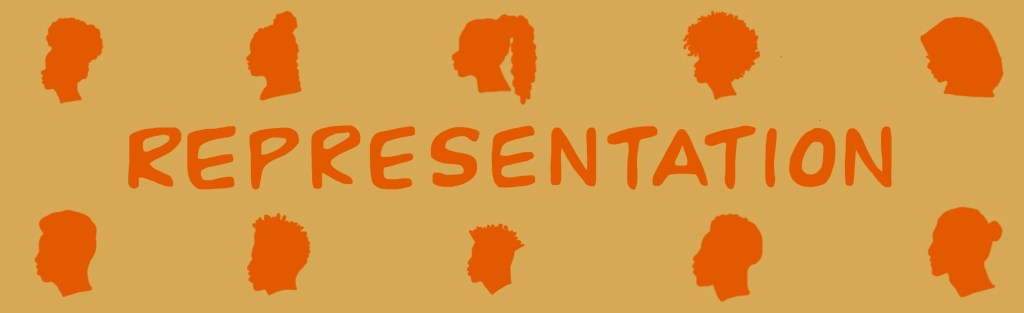
Banner with the title, "Representation" with a row of five silhouettes of people's heads in profile above and below the text in shades of sienna. The silhouettes show a mix of genders as well as non-white facial features and hairstyles.

As museums continue to grapple with representation in our experiences and in our staff, resources like the Museums & Race Report card are helpful to challenge us and to track change, or lack thereof.

Representation, in the context of the Museums & Race Report Card, refers broadly to the diversity (race, gender, sexuality, age, ability, religious beliefs, language) that is present in your museum’s staff, board, programs, exhibitions, marketing, and collections. Let’s explore each to consider how you might consider representation as part of your “grade.”

Screenshot of the Representation section of the Report Card rubric consisting of a row of five columns. First column: Representation. Second column: Your organization does not reflect the demographics of your community and does not respond to your constituents' needs. Third column: Your organization acknowledges the importance of having staff and a board that reflects your community and aspires to support their needs but has not put much effort into making those changes. Fourth column: Your organization understands and has done the research to understand your community's diversity and is actively working towards becoming a reflection of that community. Fifth column: Staff, leadership, and boards reflect community demographics and include community members. Spaces, programs, activities, etc. are diverse in makeup and inclusive in content.

Staff & Board

When I joined my previous museum in 1999, a concern that the staff shared with me was the lack of “diversity” in the staff. However, there was in fact significant diversity already present. Throughout my 5 years with the museum approximately one-third of the staff identified as LGBTQ+. Over half the staff and Board, and the majority of the leadership team and executive committee, were women. 

We needed to specifically call out and work on our concerns over a lack of racial diversity. It was important for us to learn to be specific for two reasons:

First, we needed to be specific about the identities we hoped would join the organization. The museum has an extensive outreach program — they reach more people outside their walls than they do inside. A significant portion of the school audiences they reach are BIPOC, while almost the entire Education team is white. By not being specific, that we were seeking to hire (and retain) BIPOC staff, we were talking around the issue rather than facing it directly. And by using the vague wording of wanting more diversity, we were dismissing the perspectives of the many different lived experiences already present in staff.

Second, being specific helped us realize that the museum, already a majority of marginalized identities, had a lot to learn about the work environment and culture from those who were already a part of the museum. This realization helped us to work towards creating a culture that hopefully would not just hire BIPOC staff, but would be able to retain them. As you consider representation for your organization, where might it benefit you to be more specific?

How to measure representation is another important aspect to consider. At this prior museum, we conducted annual engagement surveys where one of the questions was, “I can have genuine conversations with my coworkers without having to hide relevant parts of myself.” We used this question to help us gauge if employees felt they could bring their full selves to work. This engagement survey was confidential, and the results were shared with both the staff and the community (through an annual DEAI report) to hold ourselves accountable. In what ways are you engaging the staff to track your progress?

Exhibitions

Representation of people from multiple identities (race, gender, age, ability, religious beliefs, language, and more) is an important aspect of our work in museums. Do visitors see themselves in the exhibitions, through the stories being told, the artifacts, the images, or the graphics? A great tool that we used at my previous museum was the Association of Science and Technology Centers’ IF/THEN gender representation audit. We first used the tool to conduct an audit of gender identities present in our exhibitions and marketing, and later expanded the tool on our own to include race. This audit, shared with the staff and our community through our DEAI Report, was an important way for us to gauge where we were. To move forward, we needed to include the identities that were absent or less present by including them in the process of shaping the exhibitions that would include their perspectives and images. Do you have a tool that you use to understand where you are now in terms of representation, and that can be repeated to track change over time?

Programs

Programs are similar to the example of exhibits above, and we used the same audit process. However, the advantage with programs is that they are often much cheaper and easier to change or adapt than exhibitions. Programs are also a great example of where staff can take action on their own. To again use an example from a previous museum, in our programs with schools, staff took the initiative on their own to replace some of the over-represented western European stories with stories from cultures or identities that introduced other perspectives. This was a change that staff could do on their own and something that could be done quickly and inexpensively. This sort of change is possible when staff feel supported in making these changes. In what ways do you help to empower others to increase representation? In what ways do you take individual action to increase representation?

Marketing

This same audit process can be applied to the museum’s website, social media, and print (rack cards, visitor maps, catalogs, etc.). Are we engaging our partners in departments across the organization to ensure representation is a museum-wide effort, not just held by one or two departments?

Collections

Representation also extends to the objects in our collections. Who is doing the collecting? Are we working to collect stories that are representative of the communities in which we reside? Are we telling only one story for the objects in our collections, or are we exploring multiple stories from multiple perspectives? Are we holding our collections to the same representation standards we hold exhibits, programs, and marketing?

Connecting with Community

When I was with my first museum, I was part of a project that utilized “community informed design” rather than the more widely referred “community co-creation.” I was not aware at the time of what community informed design was, or of the distinction between this approach and community co-creation prior to my leaving. I learned of the difference only after leaving and reading this article in Curator.) 

Briefly, community co-creation is intended to be a deep collaboration between the museum and its community, where ownership and decision-making power are shared. Community informed design involves gathering input and feedback from community members, but the primary decision-making is with the museum. 

Bringing in community can take many forms. It will look different in different communities, and will evolve each time it is done. The important thing is that it is done. As the article in Curator nicely states, “Forms of community engagement can be thought of as a spectrum of power sharing that community–museum partnerships move along, ideally moving forward in intertwined activities of relationship building and meaningful change.” How is your museum engaging with your community? (Are you being specific when you say “community”?)

Progress over Perfection Postscript

Be wary of maximalism, or considering anything less than a perfect solution as a failure. Part of the work is to bring others along with us and to learn from them and their experiences. The adage of progress over perfection is important. As you work to move your institution forward, what is needed to deepen your institution’s thinking about representation beyond the numbers of individuals from various identities? For example, how do power imbalances between people with different identities play a role in whose voices are elevated and whose are pushed aside? How can everyone at your institution learn to be aware of and mitigate those imbalances? 

Wherever your institution is currently and may need to grow towards, representation is a part of a much wider web that interconnects with all of the other areas of the Report Card.

Report Card Spotlight: Funding

This post is part of a series examining the concepts of the Museums & Race Report Card. This series is intended to help readers more effectively use the Report Card by increasing their understanding of each key concept in light of justice and equity work. Each post has been written by a member of the Museums & Race Steering Committee with feedback from the group.

Banner with the title "Funding" surrounded by a dollar sign, a line chart, a pie chart, a stack of cash, a pair of credit cards, and a piggy bank, all on a green background.

As we enter 2025, the landscape of anti-racism work is facing uncertainty and museums face pressures to change their language and approaches. Museums & Race stands unwavering in our vision and we send encouragement to all the change-makers in the museum field who share our continued commitment to making museums sites of hope and liberation for BIPOC visitors, workers, partners, and community members.

In times of uncertainty, it can be helpful to turn to things that ground us and keep us oriented towards our goals. The Museums & Race Report Card serves this purpose for us. So, this post will mark the beginning of a new blog series that will explore each section of the Report Card in depth: today we address the topic of funding.

About the Museums & Race Report Card

The Museums & Race Report Card is designed to provide a holistic assessment of a museum’s anti-racist journey towards sustained systemic transformation. Organizations can use the Report Card to evaluate where they stand, to make goals for improvement, and to assess evidence of change over time. The Report Card covers seven categories of museum operations. For each category, it maps out stages of a maturity model (“graded” on a scale from F to A), with evidence of what each stage looks like within a museum.

What the Report Card says about Funding

The screenshot from the Report Card below shows the section dedicated to funding, including the following levels of the maturity model:

  • No effort/denial (F): No funding has been allocated to support this work.
  • Emerging (D-C): DEAI activities are supported primarily by short-term grants and/or soft money.
  • Developing (C-B): DEAI activities are helped partially with a permanent line in the administration budget.
  • Transforming (A): DEAI activities are supported primarily with operational funding and are a permanent line item in the administration budget.
Screenshot of the Funding section of the Report Card rubric consisting of a row of five columns. First column: Funding. Second column: No funding has been allocated to support this work. Third column: DEAI activities are supported primarily by short-term grants and/or soft money. Fourth column: DEAI activities are helped partially with a permanent line in the administration budget. Fifth column: DEAI activities are supported primarily with operational funding and aer a permanent line item in the administration budget.

The Need for Resources

A core underlying assumption for this maturity model is that change within an organization does not happen on its own; the work of structural transformation for racial justice in our museums needs to be supported financially. In many organizations, employees who care deeply about anti-racism take on the work even though it may not be within their job descriptions and often requires extra, unpaid hours on their part. BIPOC people are especially likely to take on this work—sometimes feeling forced into it by white colleagues who abdicate responsibility. This exacerbates inequities, with BIPOC workers taking on unpaid, emotionally taxing work that their white colleagues don’t do. For racial justice work to be sustainable, the people doing it need to be fairly compensated.

While every museum is different, here are some common arguments we’ve heard about why museums do not allocate resources to racial justice work, as well as some possible rebuttals to these arguments:

  • We just don’t have the money: Yes, finances can often be tight in museums and there are many priorities competing for funds. It can be helpful to turn the conversation towards the impact that allocated funding will have on strengthening the organization’s mission, expanding the museum’s audience, supporting more visitors to feel a sense of belonging in the museum, and more. As the next section describes, it can be helpful to think broadly about potential funding sources if existing funders seem hesitant to fund anti-racism efforts.
  • This should already be part of everyone’s job: Many museums have argued that, rather than dedicating funding or a specific position to anti-racism work, it should be incorporated into every museum employee’s duties. While this perspective can sometimes sound persuasive (and we do believe that everyone has a role to play in structural transformation), unless the museums are actively removing other duties or increasing people’s hours and wages, status quo is likely to persist.
  • It didn’t work last time or we already did that: Racial justice work is hard and messy. Some museums, after experimenting with the work, have realized that it can cause discomfort—and that the work isn’t easily or quickly “solved.” Finding evidence of the positives of change (even when things may not have been completely successful), fostering a culture of healing that embraces discomfort, and clearly articulating goals and next steps (rather than broadly asking for funding for ambiguous improvement) can help address these concerns.

Where does the money come from?

Beyond whether or not there is funding for racial justice work in museums, the Report Card focuses on the type of funding that supports it. There are several factors that may be relevant to consider in this regard, including:

  • Sustainability of funds: The primary focus in the Report Card’s maturity model for funding is about whether the funding for anti-racism is short-term (grants, soft-money, etc.) or a permanent line in the organization’s operating budget. Projects that depend on short-term funding spend substantial time securing the next cycle of support—time that could be spent on the actual work, instead. Short-term funding also tends to lead to shifting priorities based on funders’ interests, whereas racial justice work often benefits from long-term relationship building that responds to partners’ and community members’ interests rather than funders’ desires. One of the most effective ways of ensuring sustained funding is having a permanent line item in an organization’s operating budget, which represents a long-term commitment that doing anti-racism work is a vital component of the museum’s operations. Endowments with a stated purpose can also be tremendously powerful revenue-generators for this work.
  • Source: Whether short- or long-term, funding comes from somewhere. Organizations often grapple with questions around what counts as “good money” or when it might be unethical to accept money from a source that opposes that organization’s values. Unfortunately, a thorough investigation into the background of most funding sources will uncover a complicated and/or problematic racial history. This is where transparency and accountability (other categories in the Report Card) can come into play: organizations should collectively and transparently share and discuss where money comes from and how those decisions align with their missions and values.
  • Diversity: As is the case in many contexts, it can be valuable to support an organization’s racial justice efforts with a diversified funding stream. For instance, although above we discussed how grants’ short timelines can make sustained work challenging, during the pandemic when attendance dropped off, many grant-funded efforts were able to continue while work that depended on ticket revenue was cut. Museums tend to go to the same funders repeatedly—and those funders have been supporting what is now the status quo. So, racial justice advocates may benefit from finding new sources of revenue from people who are not invested in that status quo but who share in the visions of a transformed, racially just museum. Assembling a diverse portfolio of funding sources helps ensure that the work can continue even when revenue in one area weakens.

Transformative Change through Funding

Working for sustained, structural transformation is hard work and the people who do it need to be compensated! More importantly, it is imperative that organizations understand that a budget is a moral document. By transparently building a diverse funding portfolio of sustained funding and integrating this funding into lasting structures like operating budgets and endowments, museums set themselves up to continue the work even when certain trends and pressures arise that try to divert our attention elsewhere. Uncertainty and change are constants in our world but we can create structures that propel us through the change with the support we need to keep moving.

This Week

This week has been exhausting.

“I’m sorry, did you say a week? It feels like it’s been years.”

It’s been real, people. If this work was hard and emotionally exhausting in 2020 when there was a groundswell of support, what is it like now? So many people are living in fear as their safety and security are stripped away due to the actions of Republican leadership in the United States.

Museums & Race will continue the work. To quote Timothy Snyder, “Do not obey in advance.”

We’re hearing about the dissolution of DEI offices and shutdown of communications and impacts to the federal grants that so many of us rely on. Well, maybe there aren’t requirements for DEI as part of federal grants now. But we can still do that work. Be smart about it. Don’t lose your job and reduce your power. But keep figuring out how you can do the work.

Maybe your institution is removing their DEI team. The work will be harder, but it can still be done. Museums & Race is still a partner and tool. Reach out to us, how can we help? What changes are you seeing at your institution? Need anonymity? You got it.

We were formed at a time where, largely, institutional support and recognition for DEI work didn’t exist. We made it through that time and will make it through this time as well. It’s not about institutions. It’s about individuals. You do have individual power. You can shake this off and apply yourself. It’s not about voting harder. It’s about the conversations you have every day. It’s about choice: the decisions that you and the people you know make. Hire the best people regardless of bias. Create a place where people can thrive and the institution will thrive. Create opportunities for people to learn and grow regardless of their backgrounds. Call out systems that benefit people in power due to their race or any other factor out of their control.

Collectively, we can change the world. It will be hard. But we are never going to give up. You are not alone.

The State of Museums: Can Supporting Small Museums Solve Larger Problems in the Museum Field? 

In our initial post about the State of Museums, we mentioned an open letter to AAM written by Alli Schell of the Marshall STEAM Museum & Friends of Auburn Heights. She has since graciously written a guest blog post sharing her thoughts about small museums, and the inherent challenges they face in the larger museum field. Small museums face their own unique challenges around racial equity work and Alli mentions some of the more pressing ones, particularly around Governance, Funding, and Responsiveness. Of course much more remains to be explored still, and we welcome feedback from the community on the thoughts shared here, and on the state of museums today.

– Museums and Race Steering Committee

An old room filled with furniture and items from the past including a desk, back-lit mannequins of a doctor and patient, a small wood stove, a couch, a faded carpet, and hunting trophies.
Interior of a small museum, Billy Hathorn, CC BY-SA 3.0, via Wikimedia Commons

Can Supporting Small Museums Solve Larger Problems in the Museum Field? 

I believe they can.

But first, what is a small museum? I define it by limited capacity—such as in staffing, resources, funding, or scope. While there’s no definitive count of small museums in the U.S., a 2022 survey by the American Association of State and Local History found that 80% of private nonprofit history organizations have annual revenues under $200,000. If we extend that to all museum types, I feel it is safe to assume that the majority of U.S. museums are small. Additionally, small museums are often community-based and can play an important role in preserving diverse stories and histories.

Ten years ago, I attended my first American Alliance of Museums (AAM) conference as a budding museum professional and someone who had recently, and fortunately, landed a job in a small museum (I was the only full-time staff member). I was eager to attend the one session dedicated to small museums, only to discover that in this case, “small” meant a full-time staff of 30. Flash forward to this year where I returned to AAM, this time as a speaker on a panel discussing the innovative spirit of small museums. The session was so packed that an overflow room had to be created, which is no wonder, it was the only designated small museum session at the entire conference.

While I left the panel feeling energized, I also came back from AAM feeling disappointed once again by the lack of awareness for small museums. For an organization that promoted itself as “the only organization representing the entire museum field,” there seemed to be a significant gap in its support for the very institutions that make up the majority of the museum landscape. Taking a deeper dive, I noticed that AAM’s leadership, articles and resources were lacking in small museum representation. 

It spurred me to write an open letter to AAM to address this issue, proposing solutions that could elevate small museums (and frankly, all museums) in meaningful ways. If interested, you can read the open letter here. I am happy to report that since writing that letter, I’ve had productive conversations with AAM and that my intent here is not to criticize them but to spark a broader discussion: how can we, as a field, address these larger issues?

Ideas

Back to my opening question: why do I think supporting small museums can transform the museum field? Here are some of my ideas.

Advancing Racial Equity

Could empowering and investing in small museums accelerate anti-racist change across the entire museum landscape? It’s a bold question, but one worth exploring. To be clear, museums of all sizes are still grappling with deeply entrenched systems of white leadership, capitalist structures, and white supremacist behaviors that require dismantling. By supporting small museums it isn’t just about helping them survive—it’s about empowering them to lead. What if small museums had resources to authentically restructure their boards and leadership with a commitment to equity? Greater access to DEAI training programs for leadership, staff and volunteers? Funding to meet the needs of underserved community members as well as competitive pay for staff? What if they could establish models for the necessary structural changes needed across the museum field? 

Additionally, small museums can play a vital role in preserving and amplifying BIPOC history, experiences, and voices. They often have fewer barriers, such as layers of bureaucracy, to directly engage with their communities and tell their stories truthfully (not to say small museums are free from the biases or structures of exclusion found in the broader museum field). Since they operate closer to their communities, it can set them up to be more nimble in connecting local histories to national and global events, such as the Laurel Historical Society in Laurel, MD that curated an exhibition on the history of political activism and civic engagement within their small town. Change often starts at the grassroots level, and small museums are uniquely positioned to engage their communities in authentic, culturally responsible ways to address racial equity. 

Further Breaking Down Hierarchies

There is a pervasive idea that small museums “aspire” to become large museums, but many small museums don’t want to “grow up” into larger institutions—they want to survive and thrive on their own terms. It also is not just about sustainability, it’s about further dismantling hierarchical structures that have long prioritized the interests of larger institutions, potentially making room for a more inclusive, representative museum landscape. Breaking down these hierarchies can contribute to broader racial justice efforts by shifting power dynamics and creating space for leadership that reflects the communities museums serve. It’s time to challenge the assumption that bigger is better and embrace a more diverse, equitable future for all museums. I believe larger museums can learn a lot from their smaller counterparts: when resources are limited, how creative can you get? When you prioritize people over things, what happens? How can you deepen your connection to the community?

Job Creation

We’re all aware of the staffing crisis in this field, with intense competition for even the most entry-level positions. Yet, when we consider the sheer number of small museums across the U.S., the potential for job creation is significant. By increasing funding, support, and awareness for these institutions, we could open up more meaningful positions—positions that not only fill gaps but allow museums and workers to grow and thrive. A few additional staff members in small museums could transform their capacity to serve communities, create innovative programs, and preserve important histories.

Furthermore, investing in small museums could provide more career pathways for museum professionals of color in locations all across the United States. It could open up opportunities for people to build careers within their own communities or live outside of large cities and in (theoretically) more affordable areas. Better funded small museums could reduce unpaid internships, increasing accessibility to skill-building in this field. By reallocating resources, revisiting grant structures, and ensuring more support for small museums, we can work to address the staffing crisis while also tackling the hiring inequities that have long plagued the field.

Equity in Grant Funding

During the COVID-19 pandemic, some grantmakers temporarily expanded their funding to cover operational and staffing costs, providing a lifeline for museums of all sizes. I hoped this shift would become permanent, recognizing the crucial role it played in museum survival but unfortunately those changes didn’t last. Additionally, traditional grant structures disproportionately favor large institutions and small museums are often shut out, not because they lack vision or impact, but because of the scale of the projects required or expectations for several full-time staff members. More inclusive funding would also enable small museums to provide critical programming and services to their local community and better serve underrepresented groups. If organizations like AAM and others in positions of power could advocate to grantmakers to prioritize operational and staffing support it would be a true game-changer.

HR Support

Small museums often lack the resources to hire dedicated HR professionals, which can leave them vulnerable to major safety, ethical, and staffing issues. The absence of HR support not only hinders the ability to recruit diverse talent but can also contribute to unsafe or inequitable work environments. Could organizations like AAM take the lead in providing HR support or resources for small museums? Could they create a shared HR service or toolkit that addresses hiring practices, workplace culture and inclusion? This would be a critical step in ensuring that small museums have the capacity to foster safe, supportive environments that can attract AND retain a diverse workforce.

Universal Healthcare

Imagine if there were a way to provide universal healthcare for all museum workers. In an industry where healthcare is not always a job benefit, this would be transformative not just for small museums, but especially for marginalized museum professionals who are often disproportionately affected by a lack of access to health services. Universal healthcare would not only alleviate a major financial burden on museums but also ensure that museum professionals can thrive without sacrificing their health. In a sector that prides itself on preserving history and culture, it’s time we prioritize the health and safety of the very people who make that mission possible. 

How Can We Take Action?

I believe small museums hold the key to addressing many of the challenges we face today—but it will take a collective effort. How can we come together to build a stronger future for small museums and, by extension, the entire museum ecosystem? What role do you see small museums playing in the larger narrative of change? Let’s continue the conversation.

– Alli Schell