
This post is part of a series examining the concepts of the Museums & Race Report Card. This series is intended to help readers more effectively use the Report Card by increasing their understanding of each key concept in light of justice and equity work. Each post has been written by a member of the Museums & Race Steering Committee with feedback from the group.
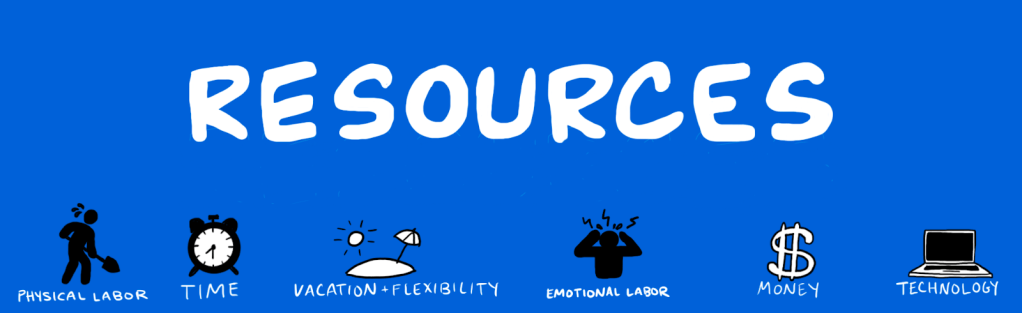
In the context of the United States, resources on all levels for museums and the arts in general have been declining for decades. But most communities of color already know that declining access to resources is simply an invitation to think creatively and strategically about how to make the most of what is available in ways that can benefit the most people.
What are Resources?
In the framework of the Report Card, Museums & Race considers Resources expansively: while money is generally the first thing that comes to mind, resources also mean knowledge, time, energy, collections, physical spaces, power and influence, board and staff, and community.
Historically, while museums that focus on and/or are run by people of color are financially under-resourced, they recognize how rich they are in so many other resources. Much of that is rooted in Indigenous ways of understanding that resources should be distributed and shared for collective uplift. And it also springs from strategies for community resilience in the face of white supremacist exclusionary tactics. Victor Green’s The Negro Motorist Green Book, a notable example, was an economic generator for Black businesses across the country while ensuring access to necessary services and amenities for Black people wanting or needing to travel.

Shifting Institutional Relationships to Resources
Rather than seeing resources as something to hoard, control, or simply exchange in transactional ways, using and distributing resources in right relationship—ethically, with genuine reciprocity, and in ways that center the knowledge and needs of the most marginalized—can allow museums to be more inclusive, racially equitable, and more deeply rooted in their communities. Here are some ways to begin rethinking institutional relationships to resources:
- In times when money and funding are precarious, how can museums and museum staff begin to leverage other resources, particularly in ways that are relational and rooted in reciprocity?
- If financial resources are stable, how can museums leverage that stability to build relationships, to broaden access, and support collective action and well-being?
- In thinking expansively about resources, can museums potentially change, improve, and sustain how they engage staff, stakeholders, and community in ways that uplift everyone and the critical role that museums can play?
These are big questions, and invite conversation and reflection. Using the Report Card can serve as a first temperature check and a way to track shifts in institutional progress.
In re-imagining what resources are and institutional relationships to those resources, scarce resources shouldn’t equal scarcity. These are the times to dig deeper into community and relationship-building, not pull back.
- How does your institution maximize what it already has?
- How can museums think and act creatively—reaching out instead of going inward—in times when funding and budgets are tight?
Models for Change
We know that there are models out there—again, many based on strategies and initiatives employed by communities of color for centuries. In the first two years of the COVID-19 Pandemic, museum unions and grassroots groups across the country mobilized to establish Mutual Aid networks for colleagues who lost their jobs or were forced to work reduced hours. Mutual Aid offers museums, particularly small museums, ways to lean on each other and work together for mutual benefit while still fulfilling their missions and supporting staff. Some things to consider:
- Can museums work together and do professional development skill “trades”?
- Can museums share volunteer pools?
- Can museums designate part of their property to serve as a community garden that feeds whoever needs it?
- Can museums serve as a drop off or collection point for community donations?
- Can museums create both rapid response plans with community AND find ways to build in longer term, consistent community touchpoints?
- Can museums be a frontline voice or resource for people in their communities being targeted or harmed?
Examples of Excellence
While museums are on the whole slow to shift into working in right relationship with the resources they have and the communities they serve, we wanted to highlight a few examples of museums that are moving in the right direction. These are not perfect institutions by any means, but small actions can have wide impacts.
Using institutional power to stand up for and with targeted communities
The Japanese American National Museum hosted a rally in August 2025 against the president’s escalation of ICE raids in Los Angeles, centering the voices of Japanese Americans who survived being sent to internment camps during WWII. The museum and its staff have continued to be vocal about supporting the rights and safety of immigrant communities, as well as preserving community history amidst the Trump administration’s attempts to whitewash or erase it.
Bringing community in to share and program space
From October 2019 through January 2020, the Portland Art Museum (PAM) in Oregon sponsored an in-gallery residency for six BIPOC-led community partner organizations in conversation with Hank Willis Thomas’ exhibit All Things Being Equal…, several of which PAM already had established relationships with.
From the PAM’s website: “Don’t Shoot PDX, We+Black, The Numberz (96.7 FM), Oregon Justice Resource Center, Portland in Color, and the King School Museum of Contemporary Art are the core community partners for All Things Being Equal…. Each of these partners brings with them ways of knowing and doing that we recognize as integral not only to engaging with Thomas’s work, but to understanding how Portlanders are thinking about their relationships to one another, to an increasingly changing city, and to the Portland Art Museum.”
Museums offering space for ongoing civic engagement
As those in government leadership attempt to restrict voting access—particulary for BIPOC people, museums have the opportunity to step into a role of civic service. In 2024, the Harn Museum of Art at the University of Florida Gainesville hosted voter registration opportunities at their evening events and served as a polling site during the election that year.
Leveraging access to funding to help museums become more inclusive
Museums for All, an IMLS and Association of Children’s Museums initiative, allows people receiving federal assistance like SNAP to get free or up to $5 admission to participating museums. There is no cost for museums to register for this, and there are currently over 1,500 museums across the country that are currently participating.
Resources as Resistance
Re-envisioning institutional resources as a mechanism for racial equity and inclusivity is an active process that requires at minimum a relational foundation. It requires seeing and listening to those without access (or with limited access) to resources and allowing those voices to serve as our guides. It requires commitment, imperfect experimentation, and transparency. In her August 2025 Museums Act Together Substack post, Gretchen Jennings wrote: “Museums must be spaces of both memory and resistance, celebration and care. We must show up not only with statements, but with actions by reimagining programs, redistributing resources, and standing visibly with our communities.”
 Museums & Race